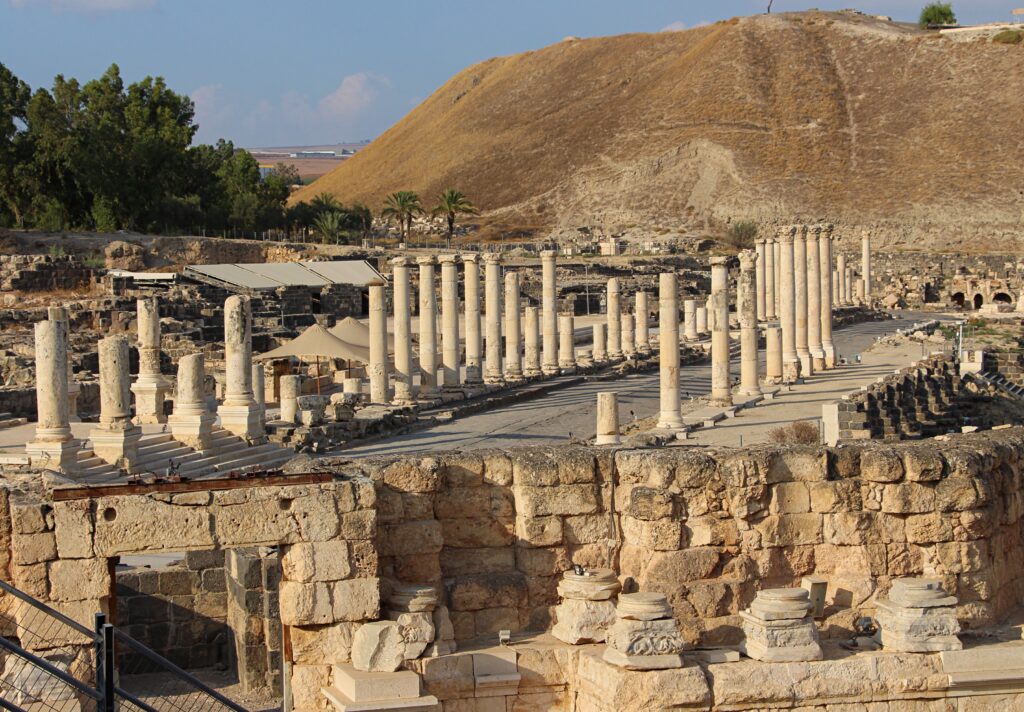
Deca-polis means ten-cities. These cities were autonomous in their local affairs, but under Rome for all other matters. They were all known to be strongholds of Hellenistic/Greek culture in the Middle East. All but one of the cities, Scythopolis, were located east of the Jordan River. The 10 cities were: Scythopolis (Old Testament Beth-Shean/Beth-Shan), Hippos, Gadara, Raphana, Dion/Dium, Pella, Gerasa (Jerash), Philadelphia (Old Testament Ammon, modern day Amman), Canatha, and Damascus.

Scythopolis
Scythopolis, pictured above, has been excavated and is a national park in Israel. It had a large market area, theater, and stadium. The city was not visited by Jesus. On top of the hill behind Scythopolis was the Old Testament city of Beth-Shean/Beth-Shan famous for being the city where the Philistines hung the dead bodies of King Saul and Jonathan from its walls. David sent men to take them down and give then a dignified burial.

Hippos
Hippos is Greek, in Aramaic it was called Sussita, in both languages the names mean “horse.” The city was founded in the 300’s B.C. and reached its zenith in the Roman-Byzantine periods 37 B.C. to 640 A.D. The city was destroyed by an earthquake in 749 A.D. and thereafter abandoned. The city is on the edge of Golan Heights and has a commanding view of the Sea of Galilee. The city was close to and overlooked the place near Gergesa where the miracle of the swine took place (Matthew 8:28–34). Hippos/Sussita is also a national park in Israel.
Gadara
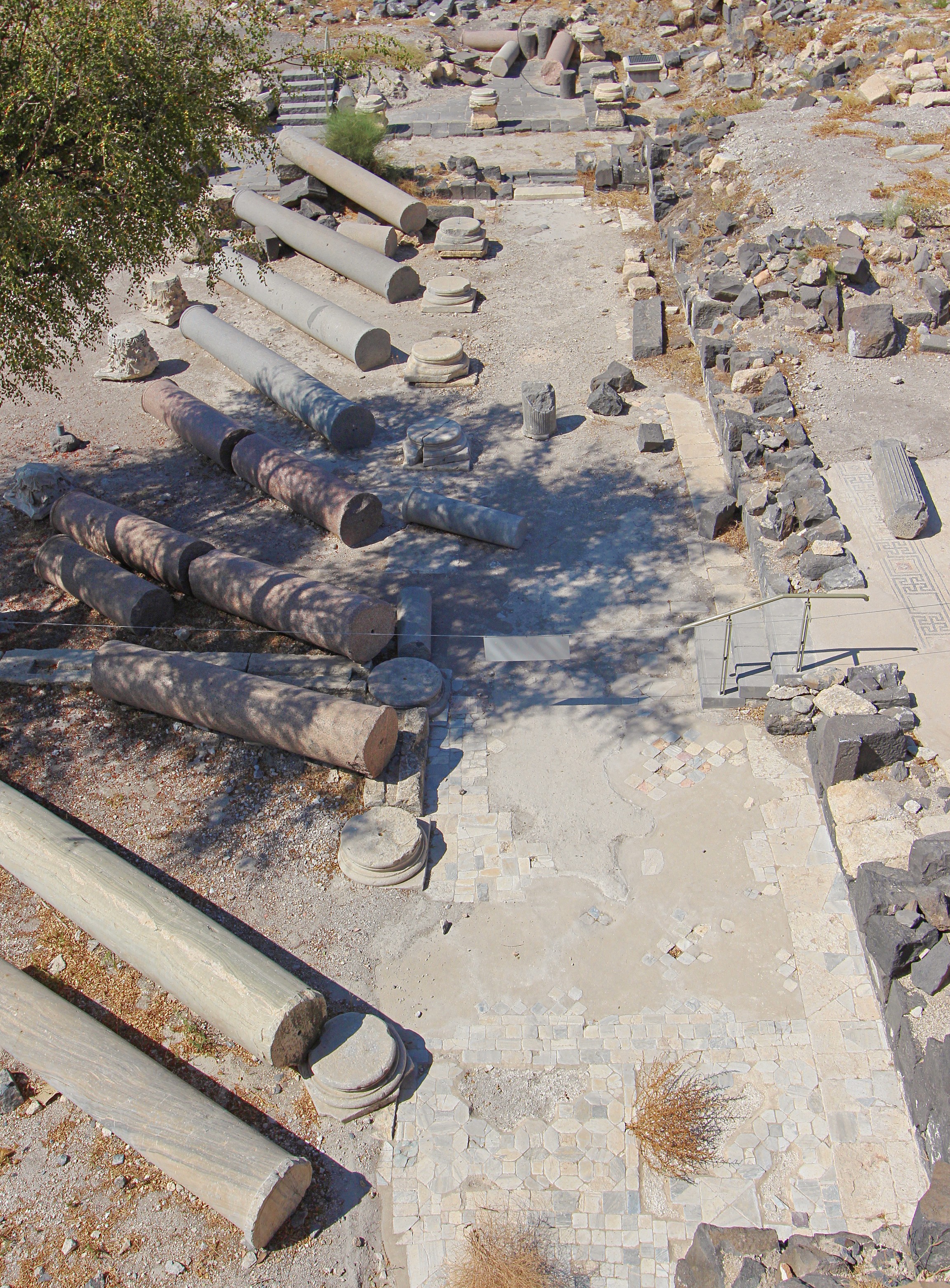
Gadara is located in the northern part of the present day country of Jordan, eight miles from the Sea of Galilee.
It has been confused as the city associated with the Miracle of the Swine (Matthew 8:28-34; Mark 5:1-19; and Luke 8:26-39). To be brief, Gadara was called Gadarenes in later manuscripts of the New Testament’s Gospels. However, in the earliest manuscripts the place of the Miracle of the Swine took place at Gergesenes. The two names are close enough to be confused. In the end, Gadara is not the city for that miracle of the Lord. See The Lord’s “Miracle of the Swine” and Casting Out Legion of Devils for more analysis.

Gerasa (a.k.a. Jerash)
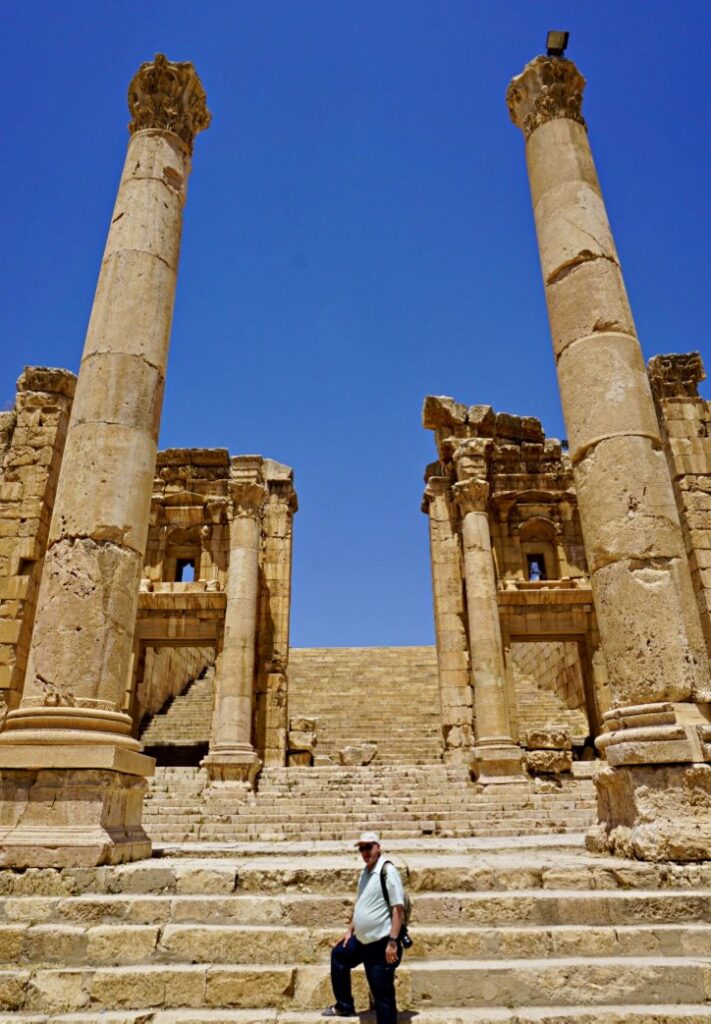
Gerasa/Jerash was founded as a Greek/Hellenistic city (about 300 BC) and flourished until it was largely destroyed in 749 AD by the same earthquake that destroyed Hippos. Today it is one of the most visited ancient sites in Jordan.


Philadelphia/Amman
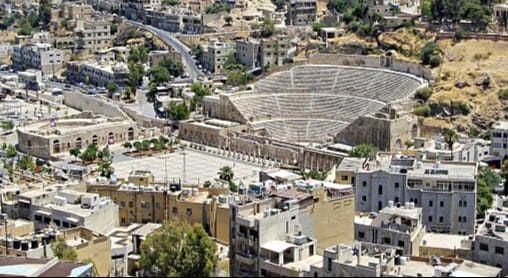
The decapolis city of Philadelphia was known in Old Testament times as Ammon, and today it is called Amman (the capital of Jordan). Nothing of the decapolis city is still standing on the ancient hill site, just ruins from later Byzantine and Islamic periods. However, below the hill site are the remains of Philadelphia’s Roman theater.
Pella
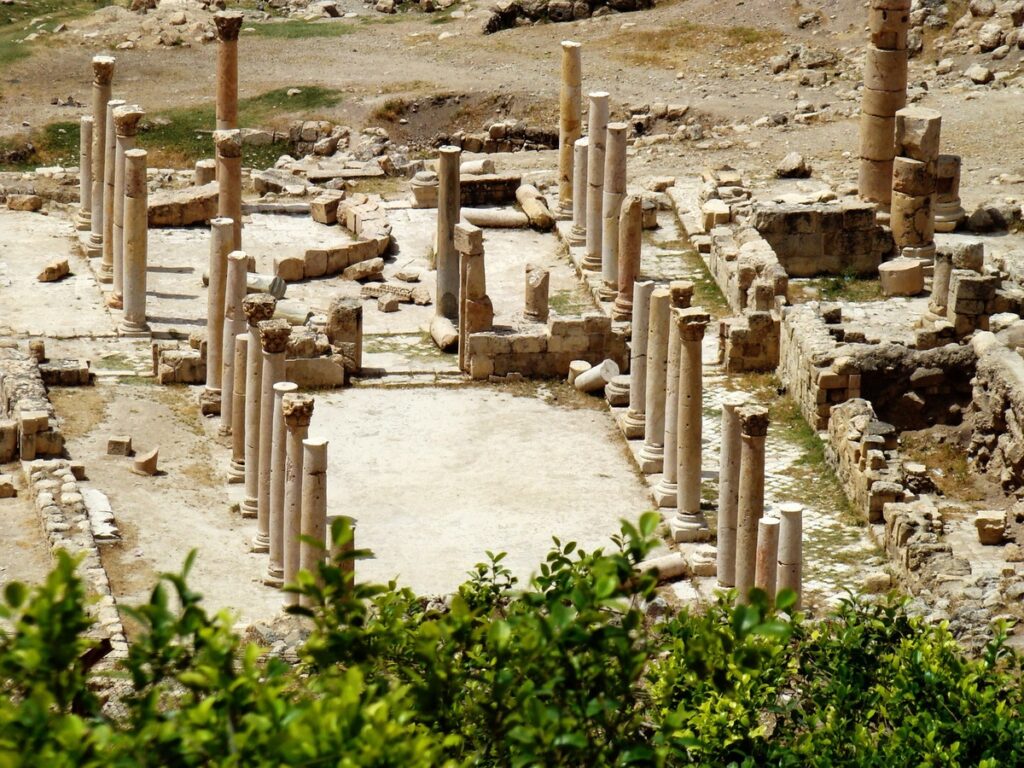
Located in the Jordan River valley on the edge of the mountains, Pella was named after the Macedonian Greek city where Alexander the Great was born. As recorded by early Christian historians, Epiphanius (about 390 AD) and Eusebius (about 314 AD), Pella was the place where the Christians of Jerusalem took refuge during the First Jewish Revolt against Rome. At the start of the first Jewish Revolt in 66 AD, there was significant fighting in the city of Jerusalem itself. By October/November of 66 AD the Roman General Gallus laid siege around Jerusalem, but shortly withdrew his troops because of trouble back in Rome. At this point the Christians remembered what Jesus Christ had prophesied:
“And when ye shall see Jerusalem compassed with armies, then know that the desolation thereof is nigh. Then let them which are in Judæa flee to the mountains; and let them which are in the midst of it depart out; and let not them that are in the countries enter thereinto.” Luke 21:20-21.
Seeing Jerusalem besieged/compassed, the Christians moved en mass to the non-rebellious Decapolis city of Pella. The number of fleeing Christians is unknown, possibly not more than a few hundred or less. There they survived the destruction and deportation of the Jewish nation. The Christians thrived in Pella and when the Roman Empire became Christian (313 AD) there had become a sizable population in Pella. In the winter of 69-70 AD the Roman General Titus (son of the new Roman Emperor Vespasian) began the second siege of Jerusalem. It was captured and leveled in 70 AD. Those few Jews who survived were sold into slavery.
Four Decapolis Cities
The other four decapolis cities of Raphana, Dion/Dium, Canatha, and Damascus I do not have any pictures. Except for Damascus, I have not visited them. Unfortunately I cannot find my photos of Damascus as I was there in the early 1990’s. Damascus was a larger city and was at times the lead city of the Decapolis group. In 64 AD the Roman General Pompey redesigned the city and the old walled city of Damascus today retains many of Pompey’s basic designs.
< Previous post on The Holy Trinity Cathedral of the Russian Orthodox Church, Jerusalem
Return to the Homepage
Next post on The Book of Revelation from Patmos Island >