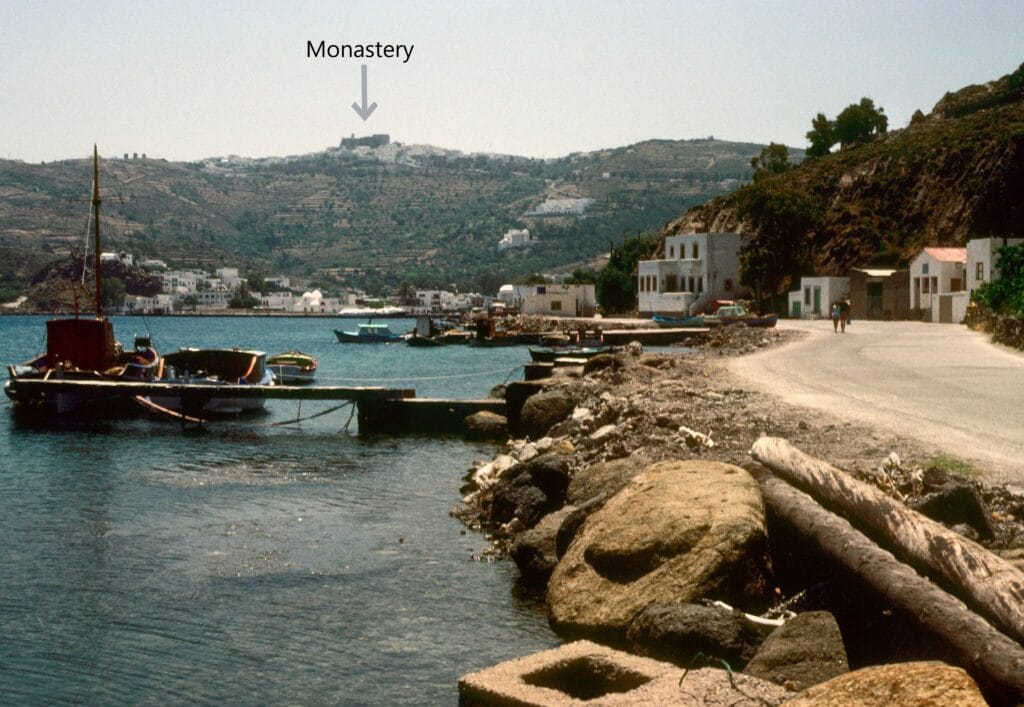
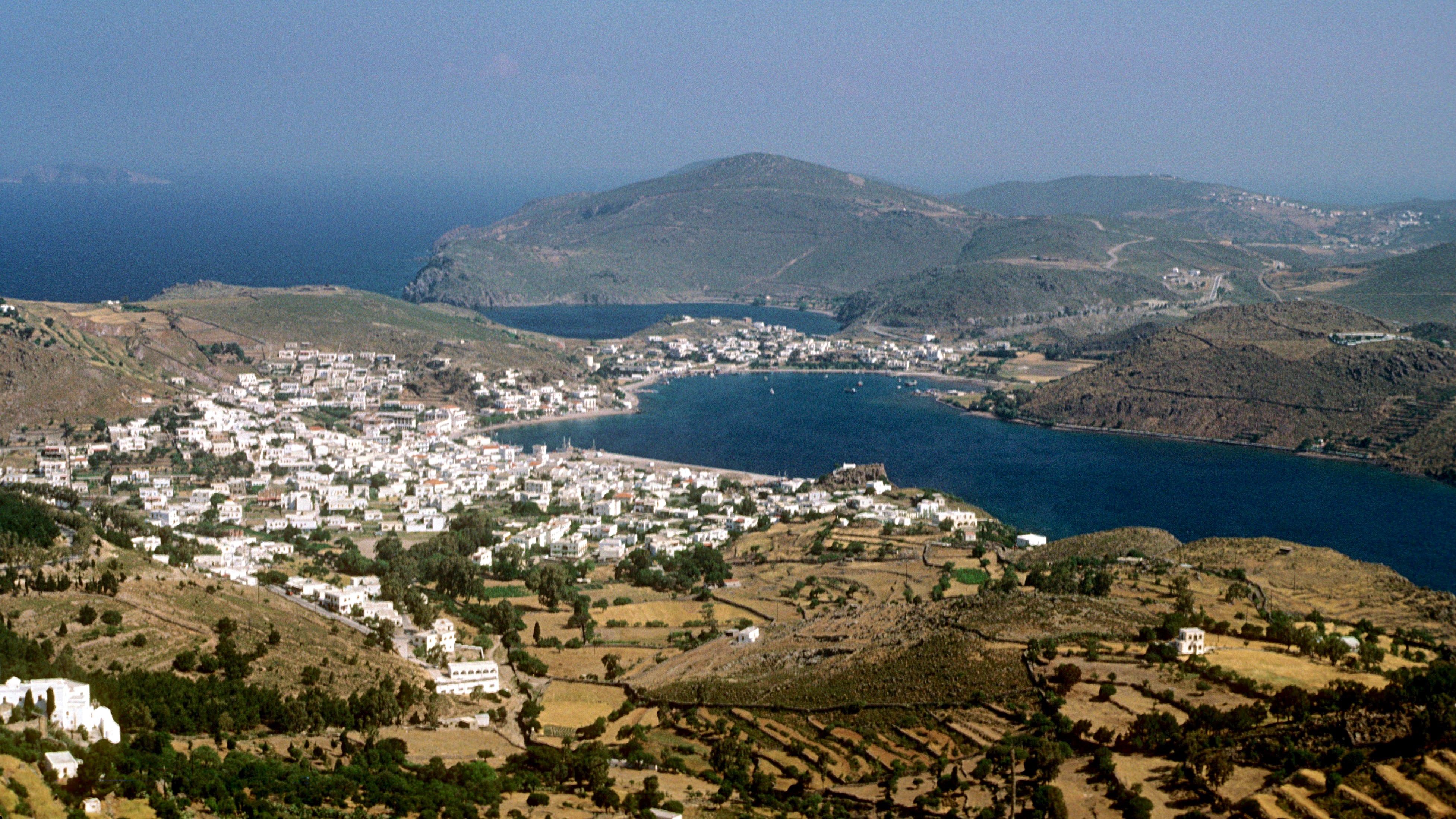
The Apostle John had been ministering the gospel to the people in what the Romans termed Asia (modern day Turkey) before he was exiled to the Isle of Patmos (in modern day Greece). This probably happened during the reign of the Roman Emperor Domitian (81-96 AD). Banishment was a common form of Roman punishment at the time. While there, John received the Book of Revelation in a vision. He then sent copies of it to the 7 churches of Asia (Ephesus, Smyrna, Pergamos, Thyaltira, Sardis, Philadelphia, and Laodicea).
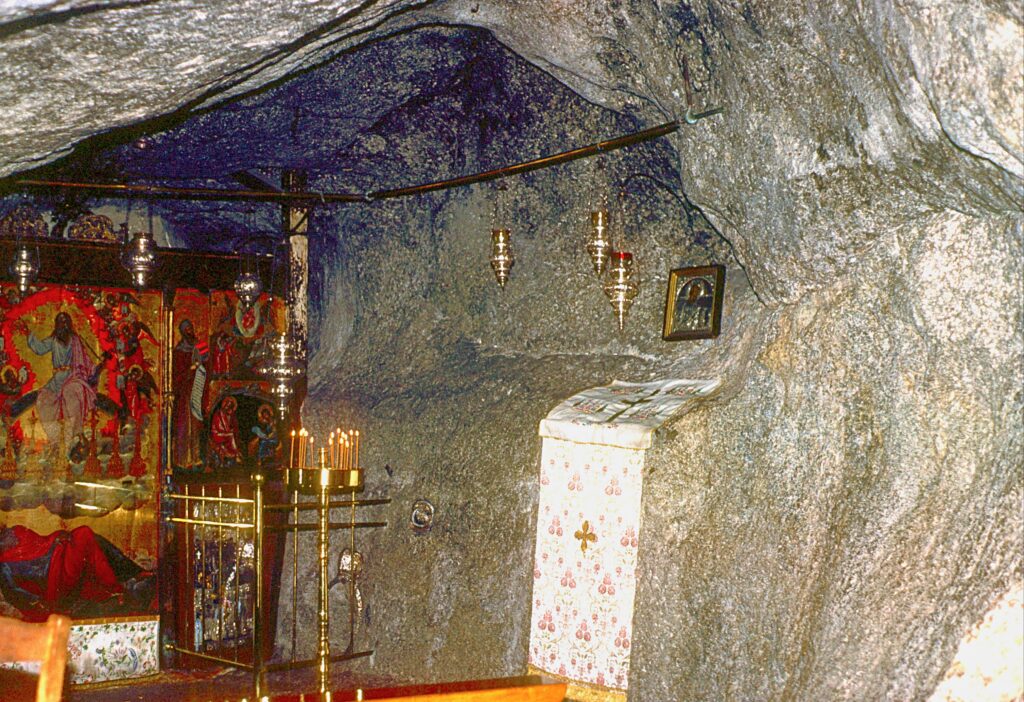
Tradition has it that John lived in a grotto (cave) near the summit of Patmos mountain. We don’t really know where on the small island he lived, however, it would make more sense if he lived in one of the island’s towns. At that time John would have likely been in his 80’s or maybe early 90’s and would naturally need to be by other people for food and water, as well as to spread the gospel. John was the youngest of the 12 apostles and at this time was the last apostle still alive. The Apostle John is also known as John the Beloved, John the Revelator, John the Evangelist, John the Theologian, and John of Patmos. Besides the Book of Revelation, John also composed the Gospel of John, and the three Epistles of John.

Book of Revelation
A better translation of the book’s title from the original Greek is Book of Apocalypse. Apocalypse means “end of days.” The language of the book is filled with symbolism. The symbols were more plain to the readers of the Roman world, but rather difficult for us who are 2,000 years removed from that world.
Here is a brief help to understanding the Book of Revelation:
Chapter 1 is an introduction to the book.
Chapters 2 and 3 were written specifically for each of the 7 churches. They each faced a different struggle, and the individual counsel given is still applicable today.
Chapters 4 through 9 begin the sequential narrative of events.
Chapters 10 through 19 are an interlude to the sequential narrative.
Chapter 15 is a back-flash giving greater detail to descriptions in chapters 8, 9, and 14.
Chapter 20 rejoins the sequential narrative where chapter 9 left off.
Chapter 22 verse 6 to the end is the conclusion of the Book. Chapters 1 and 22 serve as a type of “book ends” to the Book of Revelation.
The central message of the Book of Revelation is that the Almighty God is governing this world. In the end, God will decisively win the war over Satan who will be defeated forever. That is a comforting message. The book should not be read with expectant horror, but with expectant anticipation for the wonderful and joyful ending.
A few Symbols:
White = pure or victory
Red = power, death, sin, war
12 and its multiples (such as 24 and 144) = fullness, completeness
Forehead = thoughts, desires
repeating a word three times means the word is emphasized
Water, blood, fire = are cleaning/refining agents
1/3 and 3 1/3 = incomplete
6 and 666 = imperfection, without Christ
A mark in the forehead or hand in the Roman Empire was a mark placed on slaves. Symbol of who you belonged to.
Sun, Moon, and Stars were used for navigation.
I hope this helps a little with your own studies of this awesome book.
< Previous post on The Decapolis Cities of the New Testament Era
Return to the Homepage
Next post on The Jordan River >