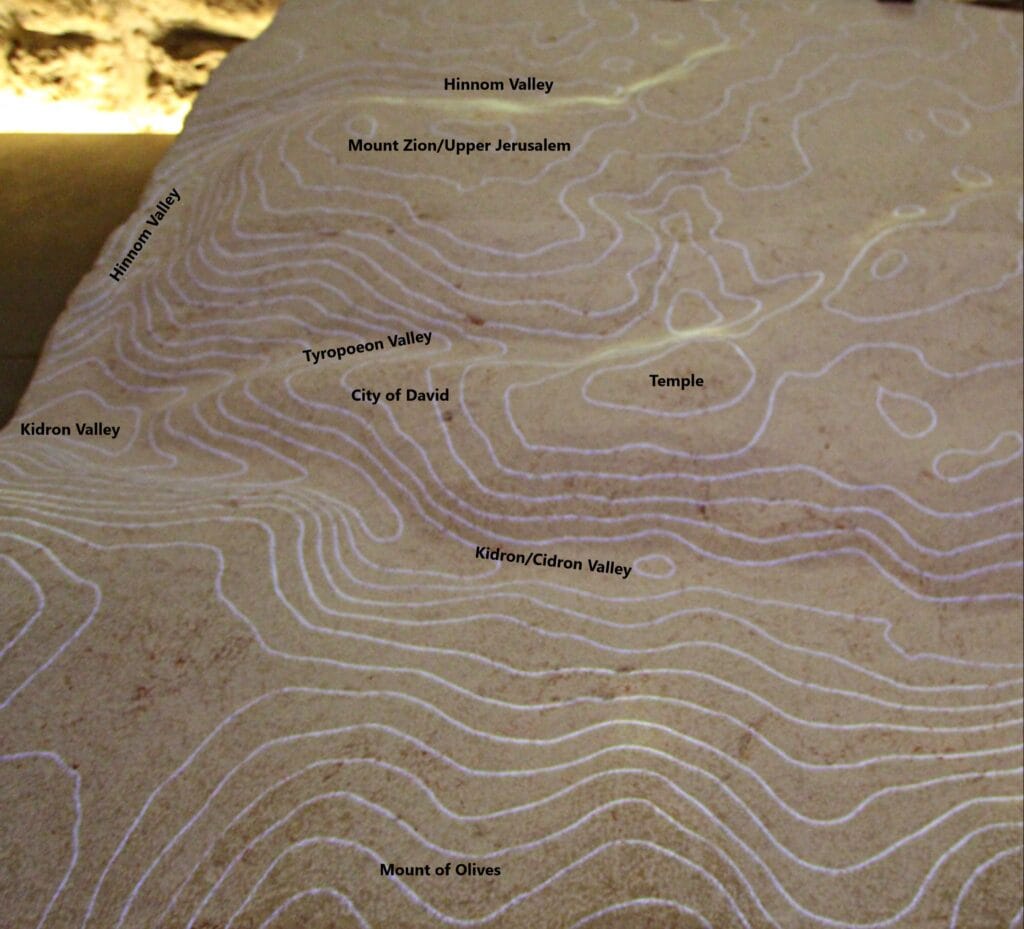
There are three valleys in and around ancient Jerusalem, namely the Kidron, Hinnom, and Tyropoean. I will discus each in a separate post.
Kidron Valley
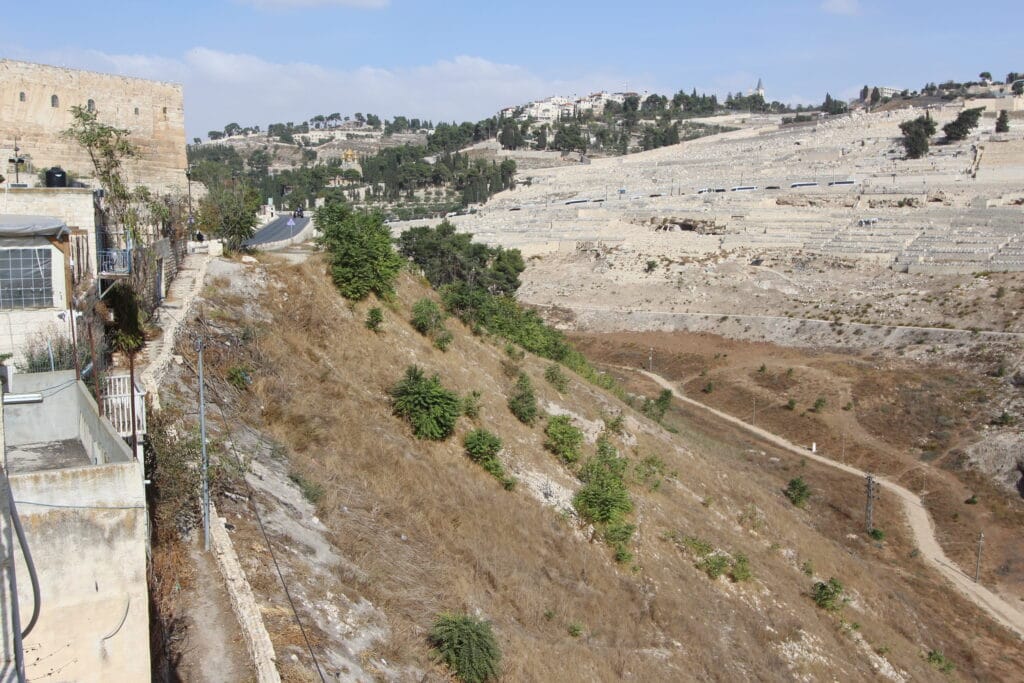
The Kidron Valley is also spelt Cedron Valley, and also called the Valley of Jehoshaphat (Joel 3:2, 12). The other two valleys run into the Kidron and then the Kidron turns east down to the Jordan Valley near Jericho. The Kidron lies on the east of Jerusalem between the Mount of Olives and the city. Travelers who took the Jordan Valley road from Galilee to Jerusalem would cross this valley to enter the city.
Jesus riding a donkey on his way to Jerusalem for his Triumphal Entry passed through the Kidron Valley (Matthew 21, Luke 19).
Following Jesus’ atoning intercessory prayer in the Garden of Gethsemane, Jesus woke his sleeping 11 apostles and “When Jesus had spoken these words, he went forth with his disciples over the brook Cedron [Kidron], where was a garden, into the which he entered, and his disciples. And Judas also, which betrayed him, knew the place: for Jesus ofttimes resorted thither with his disciples. Judas then, having received a band of men and officers from the chief priests and Pharisees, cometh thither with lanterns and torches and weapons. Jesus therefore, knowing all things that should come upon him, went forth, and said unto them, Whom seek ye? They answered him, Jesus of Nazareth. Jesus saith unto them, I am he. And Judas also, which betrayed him, stood with them. As soon then as he had said unto them, I am he, they went backward, and fell to the ground. Then asked he them again, Whom seek ye? And they said, Jesus of Nazareth. Jesus answered, I have told you that I am he: if therefore ye seek me, let these go their way: That the saying might be fulfilled, which he spake, Of them which thou gavest me have I lost none. Then Simon Peter having a sword drew it, and smote the high priest’s servant, and cut off his right ear. The servant’s name was Malchus. Then said Jesus unto Peter, Put up thy sword into the sheath: the cup which my Father hath given me, shall I not drink it? Then the band and the captain and officers of the Jews took Jesus, and bound him, And led him away to Annas first; for he was father in law to Caiaphas, which was the high priest that same year.” (John 18:1-13).
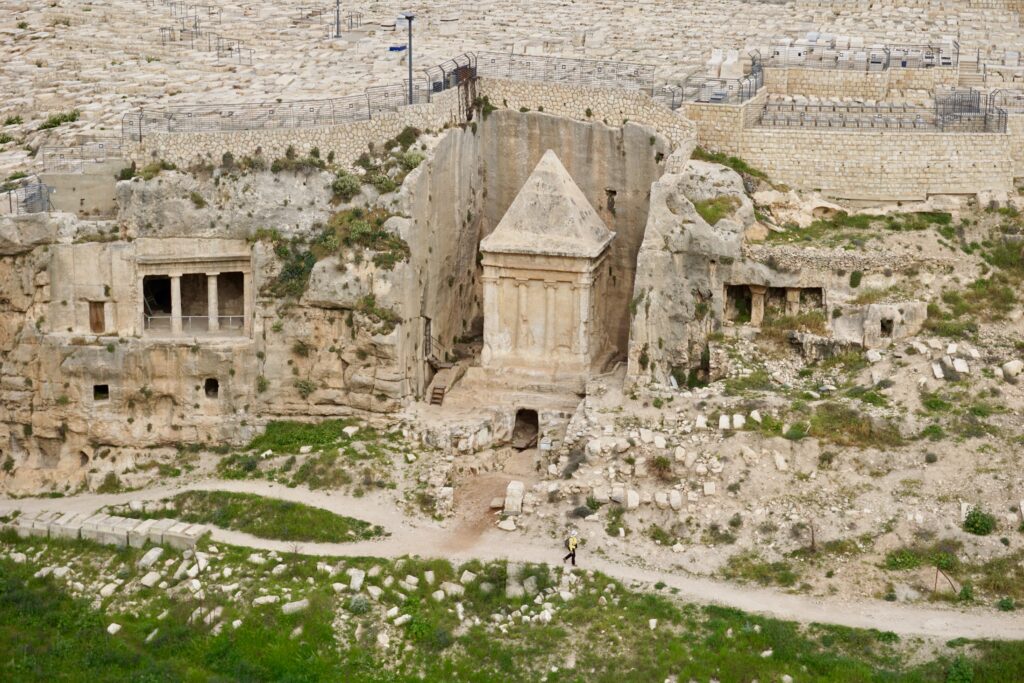
Pictured above in the Kidron Valley are first century tombs. They survived the Roman destruction of Jerusalem in 70 AD. The tomb on the left is called the Tomb of Jehoshaphat (a righteous king of Old Testament Judah), however, it’s construction date is just before the New Testament era. It is also called the Grotto of St. James because of the tradition that James hid here when Jesus was arrested in the nearby Garden of Gethsemane (John 18-13). The tomb really belonged to the Hezir priestly family.
Next, the tomb with the pyramid top also dates to the first century, is called the Tomb of Zechariah, but most likely belonged to the Benei Hezir priestly family. The far right smaller tomb is similarly from the first century.
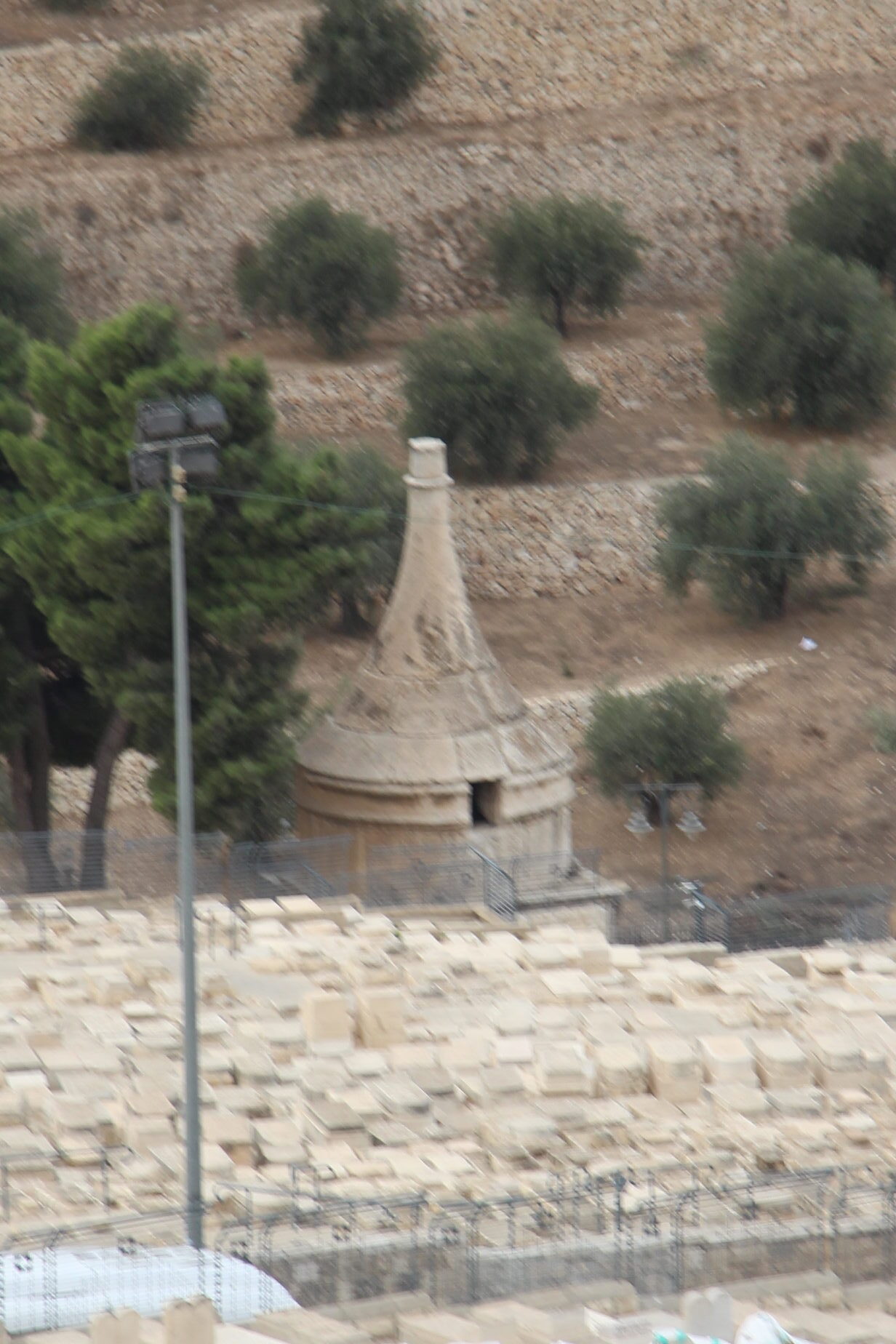
Also in the Kidron Valley is another first century tomb, pictured above, called Tomb of Absalom or Absalom’s Pillar after King David’s rebellious son. It is not of course Absalom’s Tomb. In medieval times Jews through rocks at the tomb because Absalom failed to honor his father and mother, the 5th of the 10 Commandments. During Absalom’s rebellion, King David and the priests carried the Ark of the Covenant across the Kidron in their escape from Absalom (2 Samuel 15:23).
Solomon was crowned king of Israel at the Gihon Spring in the Kidron Valley:
“So Zadok the priest, and Nathan the prophet, and Benaiah the son of Jehoiada, and the Cherethites, and the Pelethites, went down, and caused Solomon to ride upon king David’s mule, and brought him to Gihon [in the Kidron Valley]. And Zadok the priest took an horn of oil out of the tabernacle, and anointed Solomon. And they blew the trumpet; and all the people said, God save king Solomon.” 1 Kings 1:38-39.
Much later, King Hezekiah, in preparation for the Assyrian invasion, dug a tunnel to funnel the water of Gihon into the newly created Pool of Siloam in the city of Jerusalem (2 Chronicles 32:30). He walled up the original spring head of the Kidron Valley. It still exists today and is called Hezekiah’s tunnel.
The last righteous King of Judah, Josiah, burnt all of the idols of Jerusalem in the Kidron Valley (2 Kings 23).
< Previous post on What Do Israelis Call their Native Born Children?
Return to the Homepage
Next post on The Valleys of Jerusalem: Part 2 The Hinnom Valley >