First of all, Isaiah cannot be read like a novel, or one of the history books in the Bible (such as Samuel, Kings, and Chronicles); to be understood, Isaiah must be studied (just like the Book of Revelation must be studied to be understood). Therefore, I strongly recommend reading Isaiah in one hand and comparing it to an Isaiah commentary book in the other hand. It will make all the difference.
Why study Isaiah? Isaiah is the most quoted book in the New Testament, being quoted by Jesus, Paul, Peter, and John more than any other book (the book of Psalms is the the second most quoted). Isaiah was the “Shakespeare” of the Old Testament, his command of the Hebrew language was unmatched. He wrote the book in the Hebrew Poetic style and extensively used symbolism. Because it was originally written in Hebrew Poetry, many of the textual nuances were lost in translation and the symbology needs a commentary. Isaiah did not only prophesy of the coming of Jesus Christ in the meridian of time (which is in itself beautiful and worth the review), but also of the Lord’s future second coming and events shortly before His second coming (which are important for us to know about). Additionally, a favorite Christmas composition, The Messiah by George Frederic Handel, takes it’s text largely from the Book of Isaiah. (Side note: The Messiah was actually written for Easter, not for Christmas.)
Who was Isaiah? It is estimated by some scholars that Isaiah was born about 775 BC and died about 695 BC at about 80 years of age. He was the prophet in the courts of the Kings of Judah: Uzziah, Jotham, Ahaz, and Hezekiah. According to Josephus, Isaiah was brutally murdered by Hezekiah’s son, the wicked King Manasseh. According to Rabbinical sources, Isaiah’s father Amoz (named in Isaiah 1:1), was the brother of King Amaziah (the father of King Uzziah). If true, as a member of the royal family Isaiah would automatically have had access to the royal court. Isaiah’s name means “Jehovah saves, or Jehovah is salvation.” The prophet Micah, who lived and prophesied in the Judean countryside, was a contemporary of Isaiah.
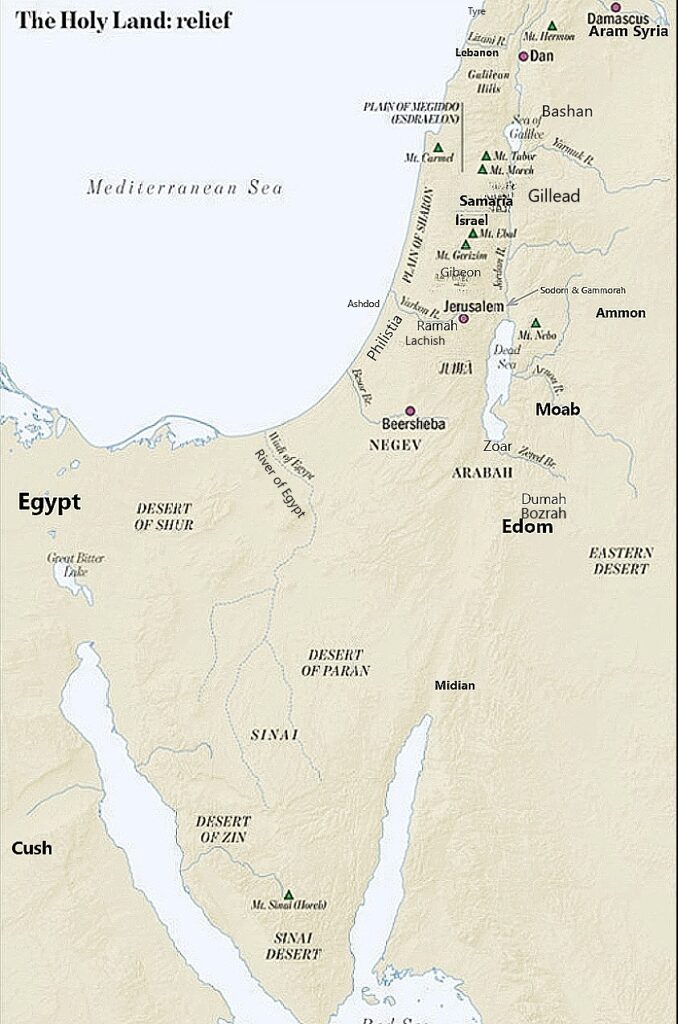
Regarding the attached map, I tried to list many of the place names mentioned by Isaiah. However, there are a few places where the location is uncertain and thus not listed. Other locations are too far off the map. For example, Babylon, Assyria, Euphrates River, Cyprus, Tarshish (in Spain), Pul (in North Africa?), Tubal (in Turkey?), and Javan (in Greece). Other names are just part of Jerusalem itself. Such as, Mount Zion, and City of David, and Ramah for a close location between Jerusalem and Bethlehem.
Sharon Plain
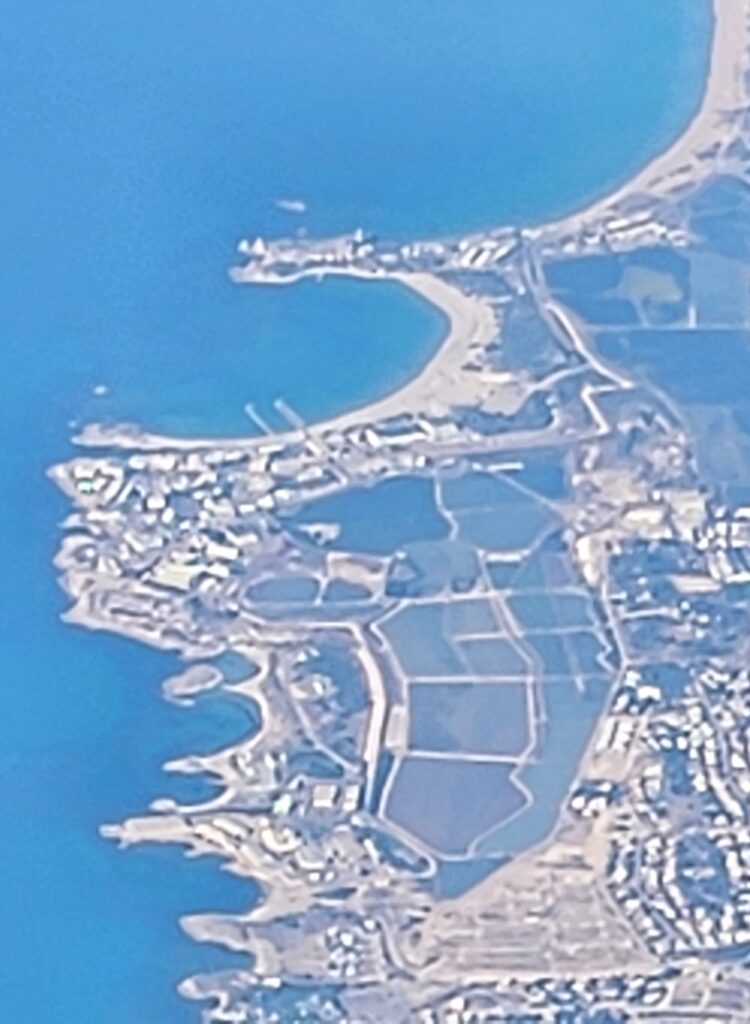
One of the places mentioned by Isaiah (Isaiah 33:9; 35:2; and 65:10) is a 10 by 50 mile long coastal plain between Tel Aviv/Joppa and Mount Carmel. Anciently the international highway between Egypt and Babylon/Assyria ran near the shoreline. Inland the plain was swampy and largely uninhabited. Today, Israel has drained the swamps and it is both a very fertile cropland as well as a population center for a large number of Israeli cities.
< Previous Post on City Gates: Their Importance and Biblical Meaning
Return to the Homepage
Leave a Reply