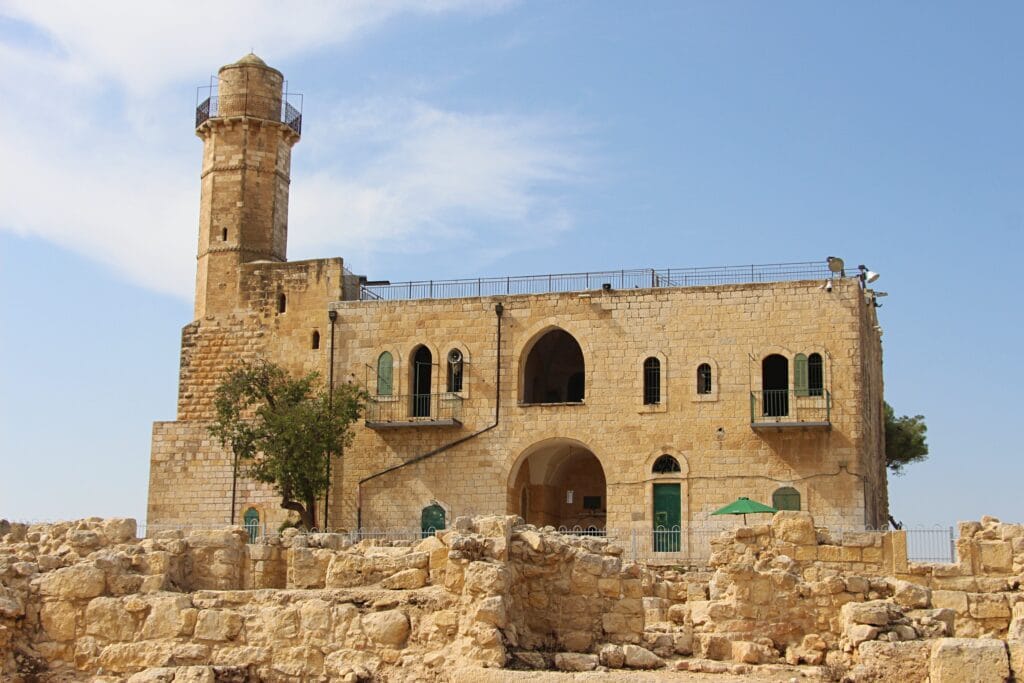
The prophet Samuel (Hebrew meaning “Name of God”) is one of the greatest prophets of the Old Testament. He is one of the few who were a Nazarite from birth (1 Samuel 1:11). From about the age of 4 or 5 until his death he was in the service of God. He was the last judge over all Israel until, when he was an old man, the people demanded to have a king like other nations. Samuel was directed to anoint a king. First Saul was anointed, but he disobeyed the Lord’s instructions by regarding men more than God. Then Samuel was directed to anoint David to be king over Israel. Even after kings were called to rule Israel, Samuel continued as prophet until his death.
Some of the memorable sayings in the book of 1 Samuel are:
“And Samuel said unto the people, Fear not: ye have done all this wickedness: yet turn not aside from following the Lord, but serve the Lord with all your heart;… Only fear the Lord, and serve him in truth with all your heart: for consider how great things he hath done for you.” 1 Samuel 12: 20, 24.
“Behold, to obey is better than sacrifice…” 1 Samuel 15:22.
“But the Lord said unto Samuel, Look not on his countenance, or on the height of his stature; because I have refused him: for the Lord seeth not as man seeth; for man looketh on the outward appearance, but the Lord looketh on the heart.” 1 Samuel 16:7.
Samuel prophesied of all the bad things a mortal king would do when they reigned. All of which came to pass. “And he said, This will be the manner of the king that shall reign over you: He will take your sons, and appoint them for himself, for his chariots, and to be his horsemen; and some shall run before his chariots. And he will appoint him captains over thousands, and captains over fifties; and will set them to ear his ground, and to reap his harvest, and to make his instruments of war, and instruments of his chariots. And he will take your daughters to be confectionaries, and to be cooks, and to be bakers. And he will take your fields, and your vineyards, and your oliveyards, even the best of them, and give them to his servants. And he will take the tenth of your seed, and of your vineyards, and give to his officers, and to his servants. And he will take your menservants, and your maidservants, and your goodliest young men, and your asses, and put them to his work. He will take the tenth of your sheep: and ye shall be his servants. And ye shall cry out in that day because of your king which ye shall have chosen you; and the Lord will not hear you in that day.” 1 Samuel 8:11-17.
Samuel according to tradition is buried at Mizpah, one of the cities he judged Israel from. The ruins of Mizpah are located within the tribe of Benjamin’s territory, which is between Judah and Ephraim/Manasseh (the largest tribes of Israel). Benjamin’s territory is on what is known as the Central Benjamin Plateau, a militarily and economic strategic region at the crest of the coastal mountains of Israel. The main road from the Mediterranean coast to Jerusalem went through this plateau, as well as the road connecting Judah to Ephraim/Manasseh. All major armies including the Egyptians, Assyrians, Babylonians, Greeks, Romans, Crusaders, and even the British in WWI first had to conquer this plateau before marching on Jerusalem. Samuel judged Israel from the cities on this plateau as it was a relatively easy place for Israel to travel to.
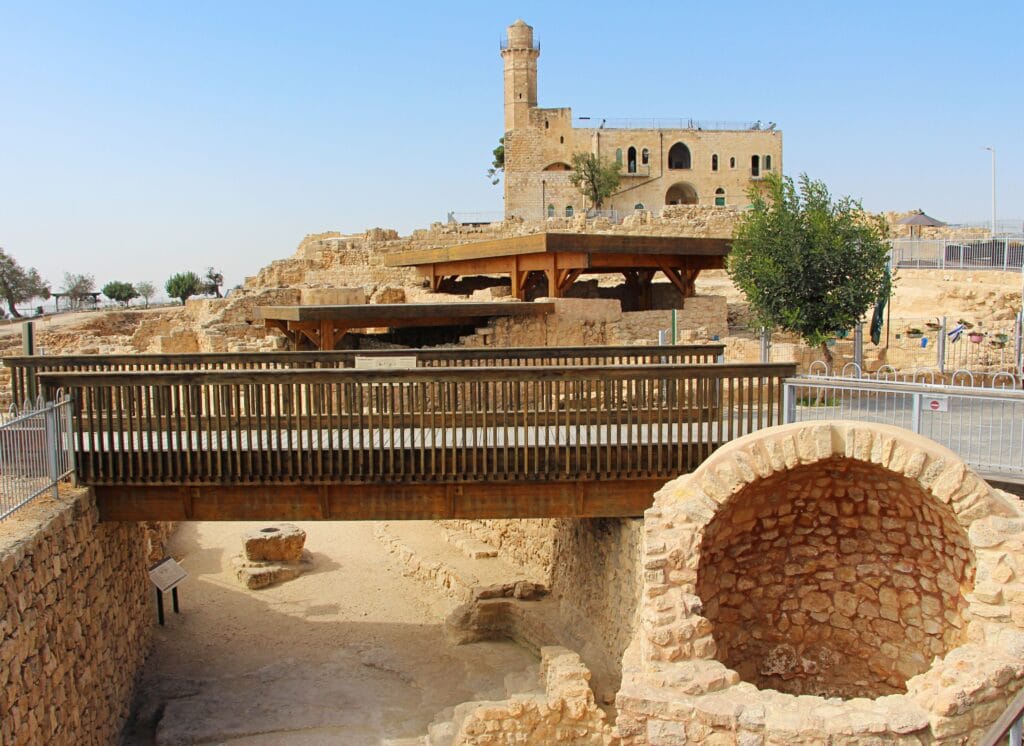
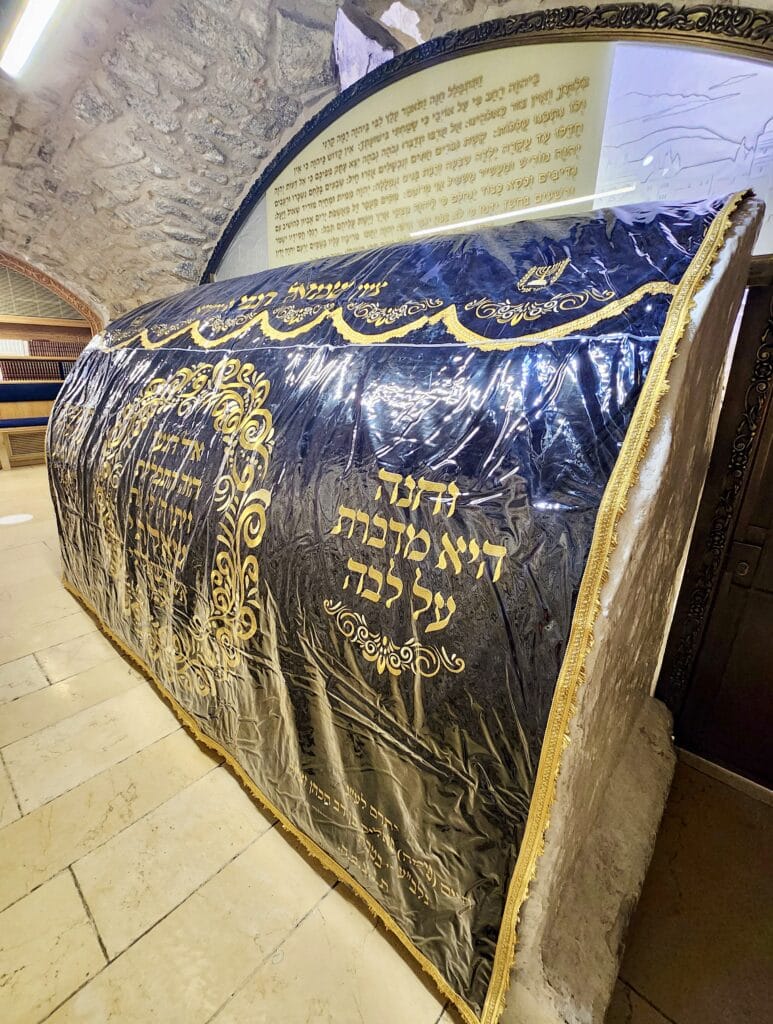
As mentioned, according to tradition which dates back to the Byzantine period (324-640 AD), Samuel was buried at Mizpah (which is on the south side of the plateau). Although the Bible says he was buried in his home town of Ramah (which is on the east side of the plateau), 1 Samuel 25:1. The Mizpah tomb was first marked by a Byzantine church. Later it was rebuilt as fortified Crusader castle, then rebuilt again as a mosque (called Nebi Samwil [Arabic for Prophet Samuel]). Today the cenotaph marking the tomb is in the basement. The basement also serves as a very small synagogue.
< Previous post on Samson
Return to the Homepage
Next post on David and Goliath >
One response to “The Prophet Samuel”
thank you again for sharing your biblical knowledge with the biblical uneducated. Love reading & seeing the pictures.