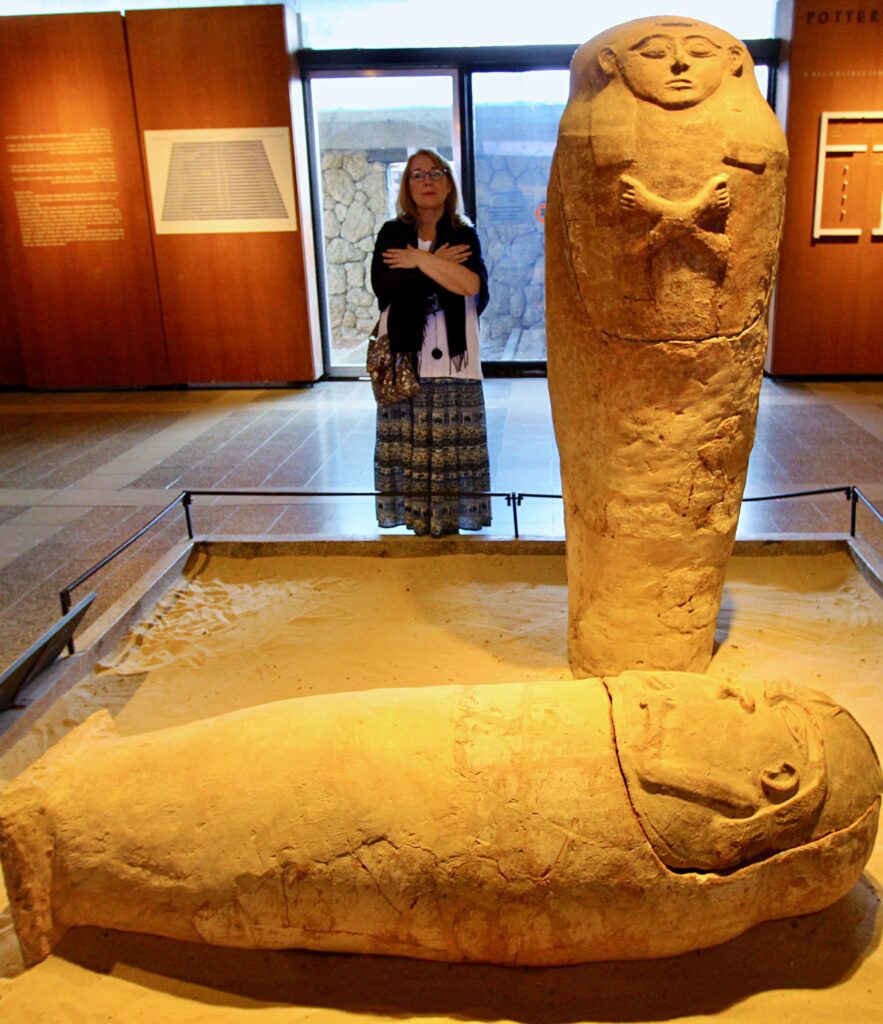
Who were the Philistines and where did they come from?
There was much circumstantial evidence pointing to Crete until recent DNA testing1. DNA testing in 2019 on Philistine burial remains showed the best match to be Crete genetics. The DNA burial samples date roughly corresponds to the fall of the Minoan civilization on Crete. The Minoan civilization was highly advanced and controlled all of the sea trade in the central and eastern Mediterranean. The Minoan empire fall began with the eruption of the Theran volcano in 1450 BC (which resulted in today’s much touristed Santorini Island caldera). The volcano produced a massive destructive seismic event and a tsunami, both of which devastated Crete and the Minoans. After this the Minoan civilization was in severe decline until its complete destruction with the Greek Mycenaean invasion of Crete around 1200 BC.
The Egyptian Pharaoh Ramesses III (reigned 1186-1155 BC) inscriptions describe an attempted invasion from the Mediterranean of a people he called the Peleset (scholars believed this is linguistically the same as Biblical Philistines). The Egyptian army repelled them and they moved up the coast into southern coastal Canaan.
Both the DNA and the Egyptian records place the Philistine invasion of southwest Canaan at about 1150-55 BC. This is also about the same time (give or take only a few years) as the Israelite invasion of Canaan from the east (opposite side of Canaan from the Philistines invasion). However, the difference between the two invading groups is that the Philistines willingly intermarried with the local Canaanites.
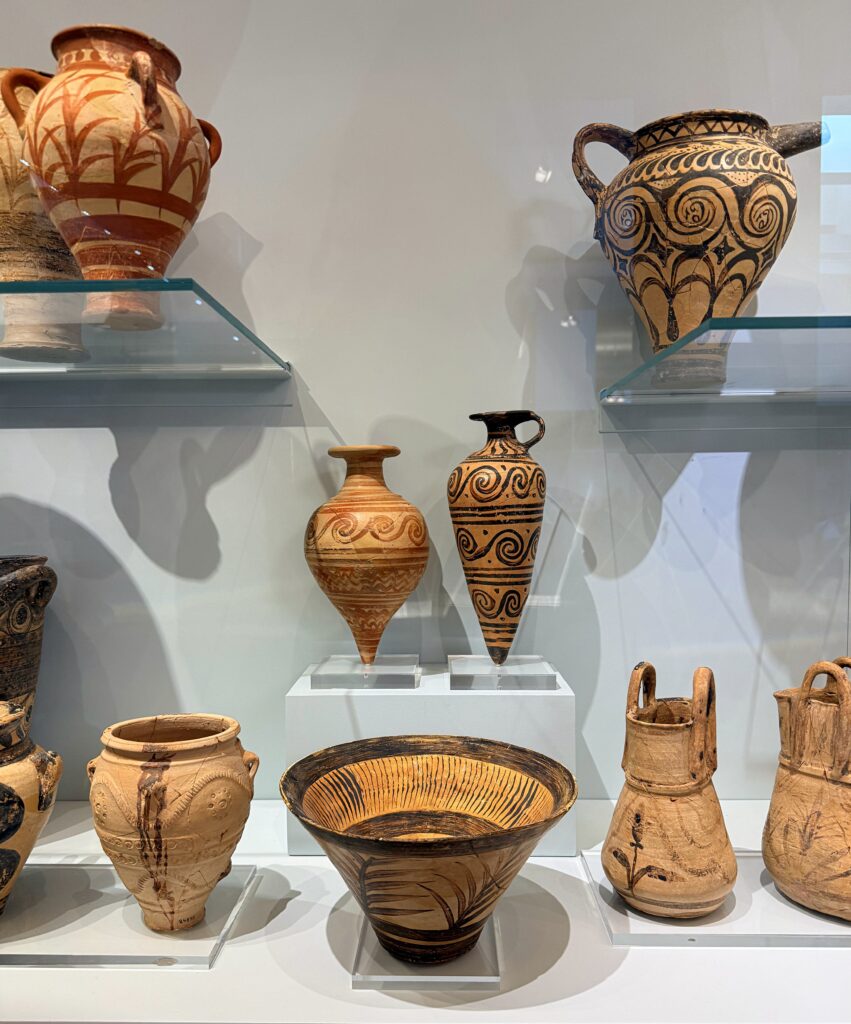
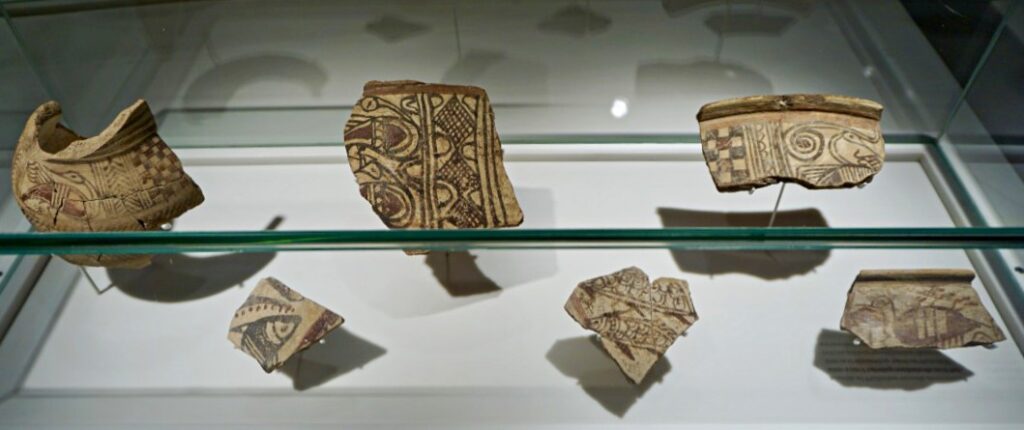
Additionally, when the Philistines arrived the pottery and building styles changed in the region of the Philistine, resembling those of the Minoans (for example, painted pottery whereas traditional Canaanite and Israelite was not painted). But over time the overall Philistine culture came to resemble the Canaanite (but they kept the painted pottery).
How did the Philistines dominate the Israelites during the era of the Book of Judges? Simple, the Philistines had iron weapons whereas the Israelites had bronze. Iron is harder than bronze, meaning that when the two types of swords struck each other, the bronze would break leaving its owner vulnerable. The Philistines likely learned how to make iron from their shipping contacts with the Greeks. The Philistines guarded the know how in steal smelting (1 Samuel 13:19). The Israelites did not learn how to make steal swords until the time of King David (probably David learned it when he lived with the Philistines while running from King Saul).
Finally, what became of the Philistines?
They were defeated and subdued during the time of Kings David and Solomon and many of the later kings. Later, many were killed and deported during the Assyrian invasion (about 713 BC), then many of the survivors were either killed and/or deported by the Babylonians (about 586 BC). The remaining minority assimilated into the new population that came from elsewhere in the Babylonian empire. So by around 600 BC basically the Philistines ceased to exist in what was previously known as Canaan. Additional peoples came after the conquest by Alexander the Great (332 BC). Those who were already living in the coastal area readily assimilated into the new Greek Hellenist culture.
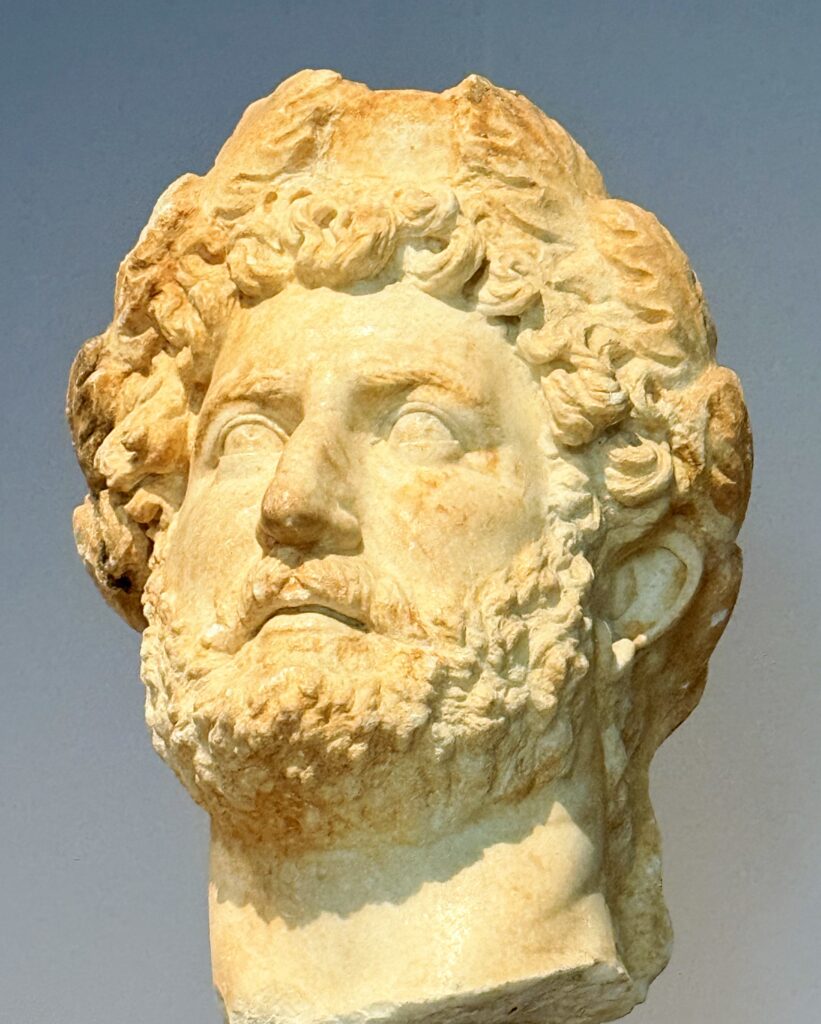
The name Palestine was given to Judea by the Roman Emperor Hadrian after the defeat and deportation of the Jews from Judea and Galilee in 135 AD. That war is known as the Second Jewish Revolt (or Bar Kokhba Revolt). Hadrian wanted to erase the troublesome Jews from the land of Judea, even forbidding a Jew from setting foot in what used to be called Jerusalem (Hadrian redesigned and renamed Jerusalem, Aelia Capitolina). The Jews were mostly dispersed throughout the Roman empire (many as slaves). A few who had surrendered early in the revolt were allowed to reside along the Mediterranean coast and in Galilee, but Judea was off limits.
Who are the modern day Palestinians descended from if not the Philistines?
They are descended from the pagan peoples of the Roman Empire who were already there in the land (Hellenized Roman supporters) or those who immigrated in for cheap land and new opportunities. These later became Byzantine Christians when Emperor Constantine converted to Christianity (324 AD). Additionally, Muslim Arab people immigrated after the Arab invasion (634 to 638 AD). Additional people came during the Ottoman period. The descendants of the Byzantine Christians who did not convert to Islam, are the Greek Orthodox Palestinian Christians of today (only 1.2% of the Palestinian population).
- Daniel M Master, “Piece by Piece: Exploring the origins of the Philistines,” Biblical Archaeology Review, Spring 2022. ↩︎
< Previous post on Jethro the Father-in-Law of Moses
Return to the Homepage
Next post on Samson >
One response to “The Philistines: Who Were They, and When?”
I love your informative messages. Very enlightening. Many thanks.